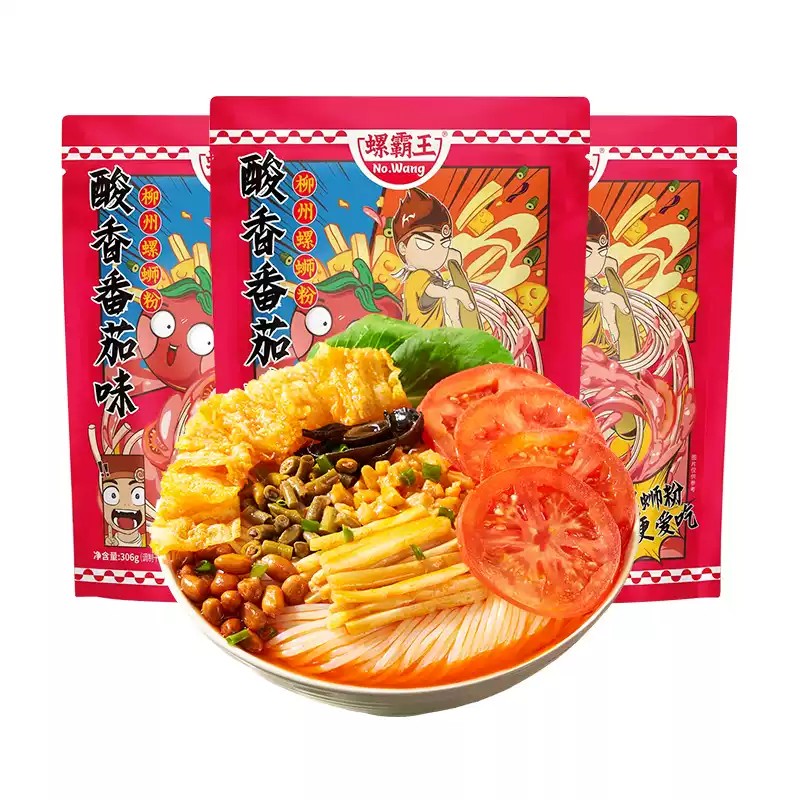
In 2025, the global Instant Food industry has shown a strong growth momentum amid the waves of consumption upgrading and scenario diversification. Data indicates that the global instant food market size is expected to exceed 650 billion US dollars for the whole year, with a stable annual growth rate of 5.8%.
Among them, the Asia-Pacific region contributes more than 42% of the consumption increment, and the Chinese market, with a consumption penetration rate of 67.3%, is significantly higher than the global average, becoming the core engine of industry growth. In this track, three categories—Self Heating Hot Pot, Self Heating Rice, and Instant Noodles—occupy a dominant position, while the innovative application of core condiments such as Hot Pot Seasonings and Soy Sauce has become a key grasp for product differentiated competition.
The self-heating food segment continues to expand, becoming the main growth driver of the instant food industry. Between 2020 and 2025, the compound annual growth rate of China's outdoor self-heating food market reached 18.3%, with the market size jumping from about 4.2 billion yuan to 9.8 billion yuan. Among them, Self Heating Hot Pot has long maintained a dominant position in the market with its rich flavors and social attributes, accounting for 45.1% of the market share in 2025; Self Heating Rice follows closely with a 28.7% share, enjoying strong demand in scenarios such as emergency reserves and business travel commutes. With the popularization of the "light outdoor" concept, more than 60% of the 210 million camping participants carry self-heating food, promoting the extension of Self Heating Hot Pot and Self Heating Rice from outdoor scenarios to daily scenarios such as home late-night snacks and office light meals, forming an all-scenario coverage pattern.
The upgrading of the condiment system has become a core breakthrough for improving the quality of instant food. Taking Self Heating Hot Pot as an example, leading brands have focused on Hot Pot Seasonings innovation, launching customized seasoning packages by integrating regional flavors such as Sichuan-Chongqing spicy and Cantonese fresh flavors. At the same time, they have drawn on traditional hot pot ingredient processing techniques to optimize the adaptability between seasonings and ingredients, achieving a breakthrough in "instant flavor restoring homemade taste". In the fields of Self Heating Rice and Instant Noodles, the precise application of Soy Sauce has become the key to enhancing flavor—high-quality brewed soy sauce can not only improve the umami level of staple foods but also make up for the original flavor of ingredients lost in industrial processing through the synergistic effect with other condiments. Some high-end products even adopt additive-free soy sauce, catering to consumers' demand for clean labels.
Industry standardization and technological innovation drive industrial upgrading hand in hand. The "Interim Measures for the Examination of Production Licenses for Self-Heating Food" issued by the State Administration for Market Regulation has clarified the requirements for the composition of heating packs and packaging specifications of products such as Self Heating Hot Pot and Self Heating Rice, promoting the standardized development of the industry. At the same time, enterprises continue to make efforts on the production side. For example, the self-heating food production line has doubled its production capacity and increased efficiency by 80% through process iteration, while Instant Noodles enterprises focus on low-salt and low-oil technology and fresh-keeping process innovation to respond to the healthy consumption trend. At the supply chain level, leading enterprises ensure the quality of raw materials such as Soy Sauce and Hot Pot Seasonings through the origin direct procurement model, build a "full-chain quality control system", and consolidate their market position with extreme cost performance.
Channel changes and consumption stratification have further reconstructed the market pattern. Online channels contribute 58.3% of the sales of self-heating food, and live streaming has become an important way for Self Heating Hot Pot and Instant Noodles to reach Generation Z; offline, scenario-based penetration is achieved through convenience store heating areas and scenic spot retail points, forming an online-offline full-domain coverage network. The consumer side shows obvious differentiation: the first-tier market prefers high-quality, short-shelf-life instant food, while the low-tier market still mainly focuses on cost-effective normal-temperature categories. The low-sugar and low-sodium instant food concerned by the silver-haired generation and the cross-border flavor products popular among Generation Z together constitute the industry's incremental market.
Insiders pointed out that in 2026, the instant food industry will continue to focus on three major directions: "healthization, scenarioization, and condiment innovation". Self Heating Hot Pot and Self Heating Rice will further optimize their nutritional ratios, Hot Pot Seasonings, Soy Sauce and other condiments will upgrade to naturalization and functionalization, and Instant Noodles are expected to regain vitality through flavor cross-border and packaging innovation. With the acceleration of industry integration and the improvement of the standard system, leading brands with supply chain advantages and innovative capabilities will lead the instant food industry into a new stage of high-quality development.