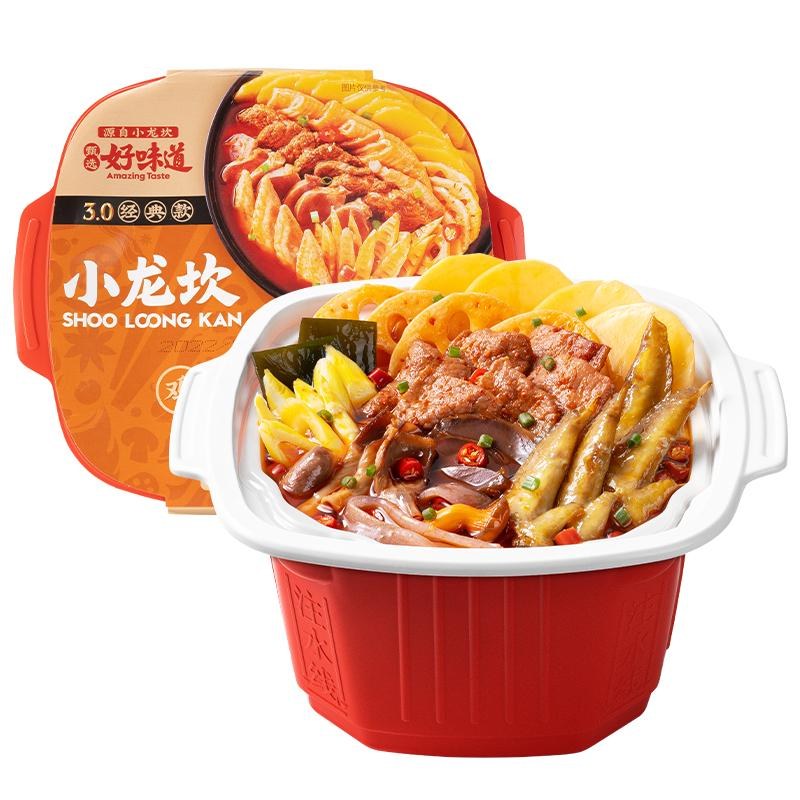
In recent years, with the acceleration of the pace of life and the upgrading of consumer demands, the self-heating food market has remained extremely popular. Instant meals represented by "self-heating hot pot" and "self-heating rice" are rapidly capturing the market and becoming the new favorites of office workers, outdoor enthusiasts and young people. With just a cup of cold water and no need for electricity or fire, you can enjoy steaming hot pot or rice. This innovative product under the "lazy economy" is redefining convenient dining.
The core of self-heating technology lies in the use of heating packs to react with water to generate high-temperature steam, which can quickly heat food ingredients. Currently, the products on the market have expanded from the early self-heating hot pot to a wide range of categories such as self-heating rice and self-heating noodle soup. With pre-prepared seasoning packets like "hot pot base" and "soy sauce", the flavors have become increasingly diverse. Leading brands continuously enhance the consumer experience by optimizing the texture of rice grains, upgrading the taste of meat dishes, and customizing regional flavor sauces (such as Sichuan spicy, tomato, and mushroom soup).
Meanwhile, the traditional "instant noodle" industry is also accelerating its iteration. Some brands have launched self-heating noodle products, forming a competitive linkage with self-heating food. Soy sauce and condiment enterprises have taken the opportunity to launch derivative products such as special soy sauce and dipping sauces for hot pot, further expanding the consumption scenarios.
Industry analysts point out that the explosive growth of self-heating food stems from its precise response to the demand pain point of "coexistence of convenience and quality". In 2022, the market size of self-heating food in China exceeded 10 billion yuan, with an average annual growth rate of over 20%. In the future, the improvement of product safety standards, the research and development of green and environmentally friendly packaging, and the healthy and nutritious proportioning will become the key to competition.
Although the market prospects are broad, consumers still need to pay attention: when purchasing, choose regular brands, ensure that the heating packs have no leakage and the food packs have no gas, and strictly follow the instructions to operate to avoid the risk of scalding. Self-heating food is becoming an "emergency delicacy" on modern people's dining tables, but a reasonable combination of fresh ingredients can ensure a healthy diet.
The core of self-heating technology lies in the use of heating packs to react with water to generate high-temperature steam, which can quickly heat food ingredients. Currently, the products on the market have expanded from the early self-heating hot pot to a wide range of categories such as self-heating rice and self-heating noodle soup. With pre-prepared seasoning packets like "hot pot base" and "soy sauce", the flavors have become increasingly diverse. Leading brands continuously enhance the consumer experience by optimizing the texture of rice grains, upgrading the taste of meat dishes, and customizing regional flavor sauces (such as Sichuan spicy, tomato, and mushroom soup).
Meanwhile, the traditional "instant noodle" industry is also accelerating its iteration. Some brands have launched self-heating noodle products, forming a competitive linkage with self-heating food. Soy sauce and condiment enterprises have taken the opportunity to launch derivative products such as special soy sauce and dipping sauces for hot pot, further expanding the consumption scenarios.
Industry analysts point out that the explosive growth of self-heating food stems from its precise response to the demand pain point of "coexistence of convenience and quality". In 2022, the market size of self-heating food in China exceeded 10 billion yuan, with an average annual growth rate of over 20%. In the future, the improvement of product safety standards, the research and development of green and environmentally friendly packaging, and the healthy and nutritious proportioning will become the key to competition.
Although the market prospects are broad, consumers still need to pay attention: when purchasing, choose regular brands, ensure that the heating packs have no leakage and the food packs have no gas, and strictly follow the instructions to operate to avoid the risk of scalding. Self-heating food is becoming an "emergency delicacy" on modern people's dining tables, but a reasonable combination of fresh ingredients can ensure a healthy diet.